Equipment-specific design basis
The functional duty, operating environment, load cases, interfaces, materials, welding requirements and corrosion protection are defined for the item being built.
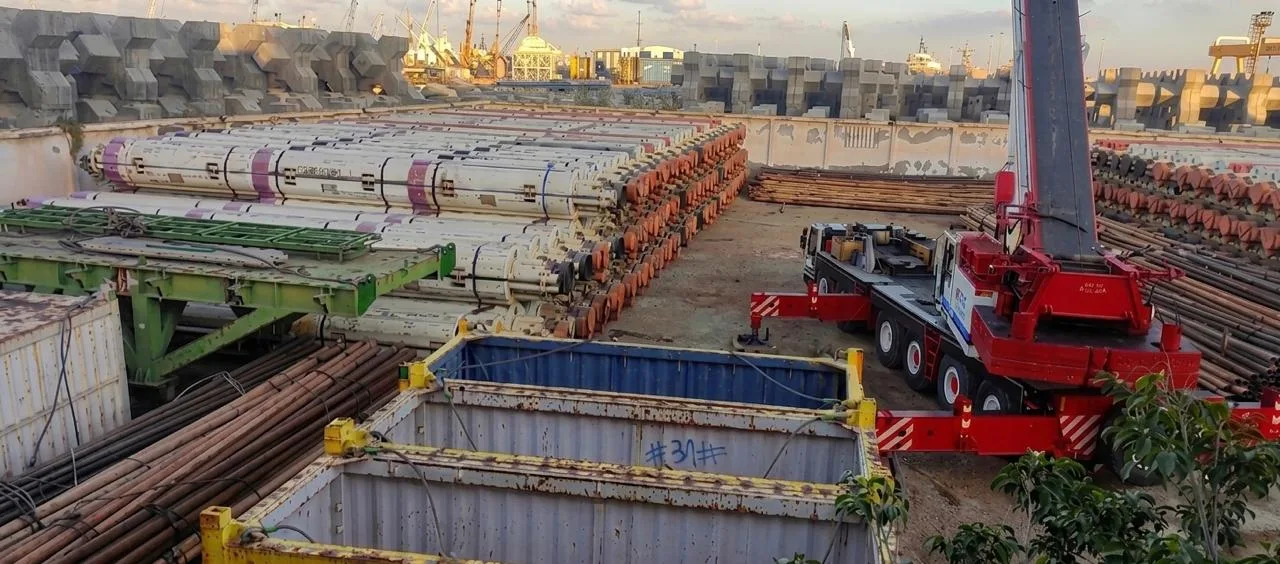
Custom marine and offshore equipment engineered, fabricated, inspected and tested to the agreed requirement.
Service overview
Planned around the operational requirement
Max Marine engineers, fabricates and tests purpose-built equipment for marine and offshore operations, including wireline and side-scan winches, Launch and Recovery Systems, Hydraulic Power Units, offshore frames, cargo baskets and ROV tool skids. Each item is developed around its operating envelope, load path and interface requirements.
Design inputs, fabrication records, inspection documents and test results are controlled from the initial requirement through testing and handover. This service owns custom equipment; standard rental and available-unit enquiries remain on the Offshore Containers & Cargo Baskets page.
Included scope
The working scope is confirmed against the vessel, cargo, site or project requirement before execution.
Fleet & Assets
Representative custom-build capabilities from Max Marine's engineering and fabrication portfolio.
| Equipment | Delivery model |
|---|---|
| Towing Winches | Custom build |
| Survey Winches | Custom build |
| A-Frame & LARS | Custom build |
| Hydraulic Power Units | Custom build |
| ROV Tool Skids | Custom build |
Design and quality control
Max Marine fabricates more than containers and baskets. Winches, launch-and-recovery equipment, hydraulic power units, skids, frames, workshops and other marine or offshore equipment require an item-specific design basis rather than one blanket standard.
The functional duty, operating environment, load cases, interfaces, materials, welding requirements and corrosion protection are defined for the item being built.
The agreed scope can include material traceability, dimensional checks, welding and NDT controls, functional testing, proof-load testing and documented handover records where applicable.
For applicable offshore containers and lifting sets, the project specification may include ISO 10855-1:2024 and ISO 10855-2:2024, or DNV-ST-E271 (DNV 2.7-1). Other fabricated equipment is assessed against its own duty, client specification and any agreed class or third-party requirements.
Drawings, inspection records, test results, certificates and operating information are compiled to the handover scope agreed for the project.
Use of an applicable standard does not by itself mean that a design or unit is DNV-certified. The inspection, approval and certification route is confirmed for the specific project before fabrication begins.
Buyer guidance
The answers below are general planning guidance. Port, authority, vessel and timing requirements are confirmed for the specific operation.
Yes. Client-issued drawings can be reviewed with the material specification, load cases, interfaces, inspection requirements, certification needs and project schedule before fabrication begins.
Yes. When the client provides the operating requirement rather than a finished drawing, Max Marine can develop the engineering scope and design around the duty, loads, interfaces and required testing, then proceed through fabrication and handover after the agreed review and approval stages.
Send the functional requirement, drawings, interfaces and load cases for a fabrication-scope review.